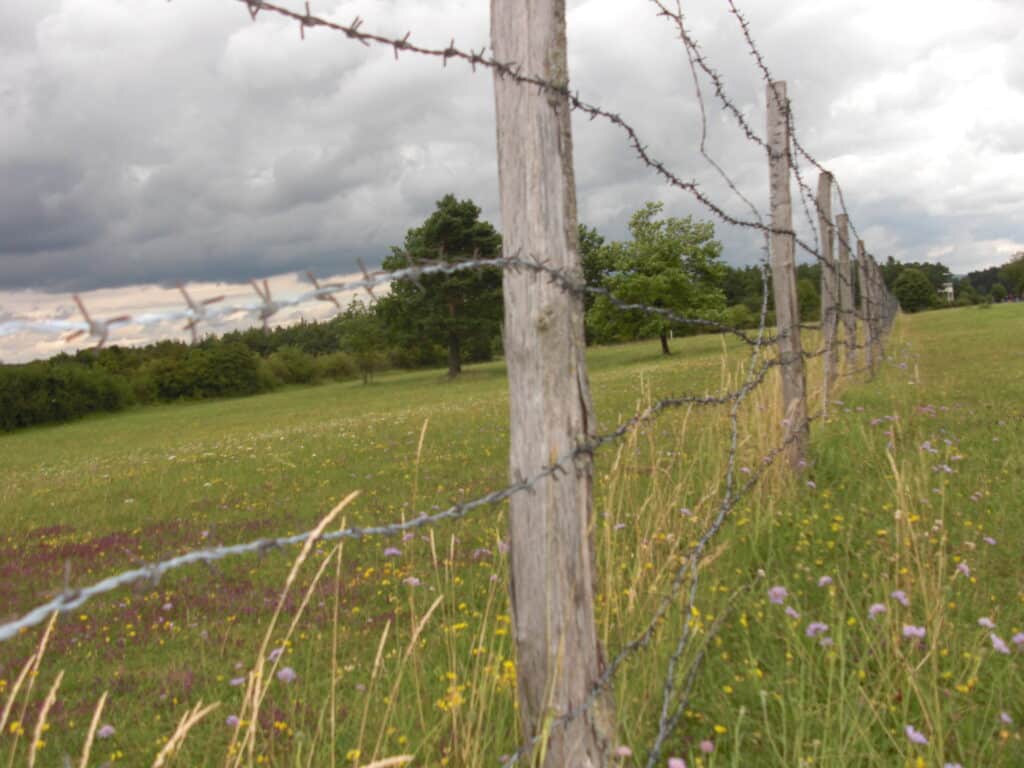
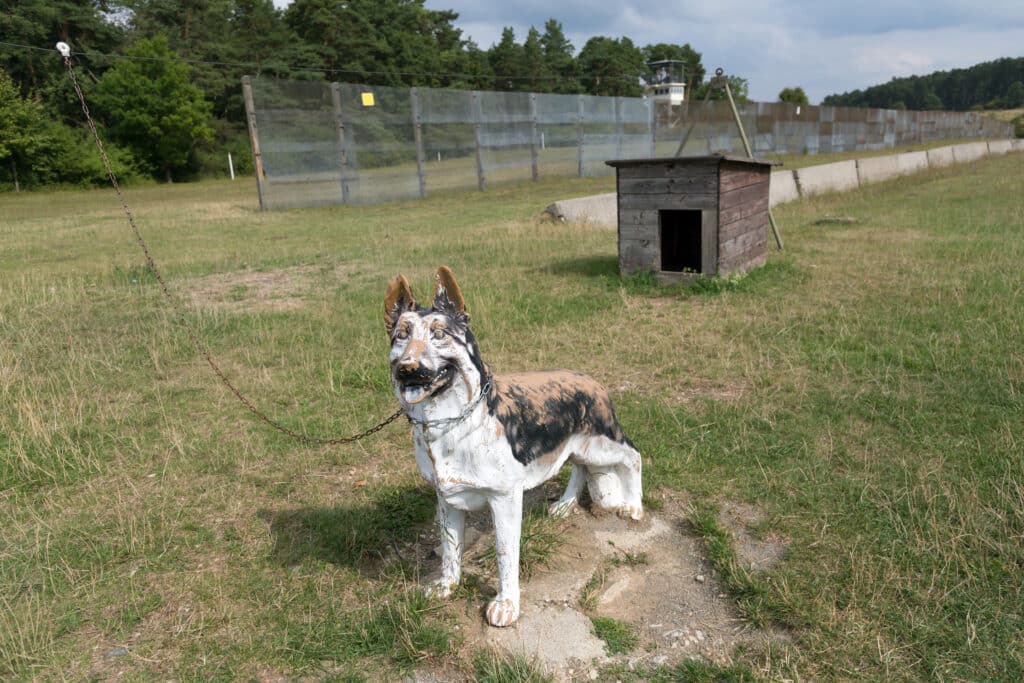

Border Fortifications The tour passes original border fortifications and border reconstructions from the 1960s to 1980s.
Border (Re)Constructions
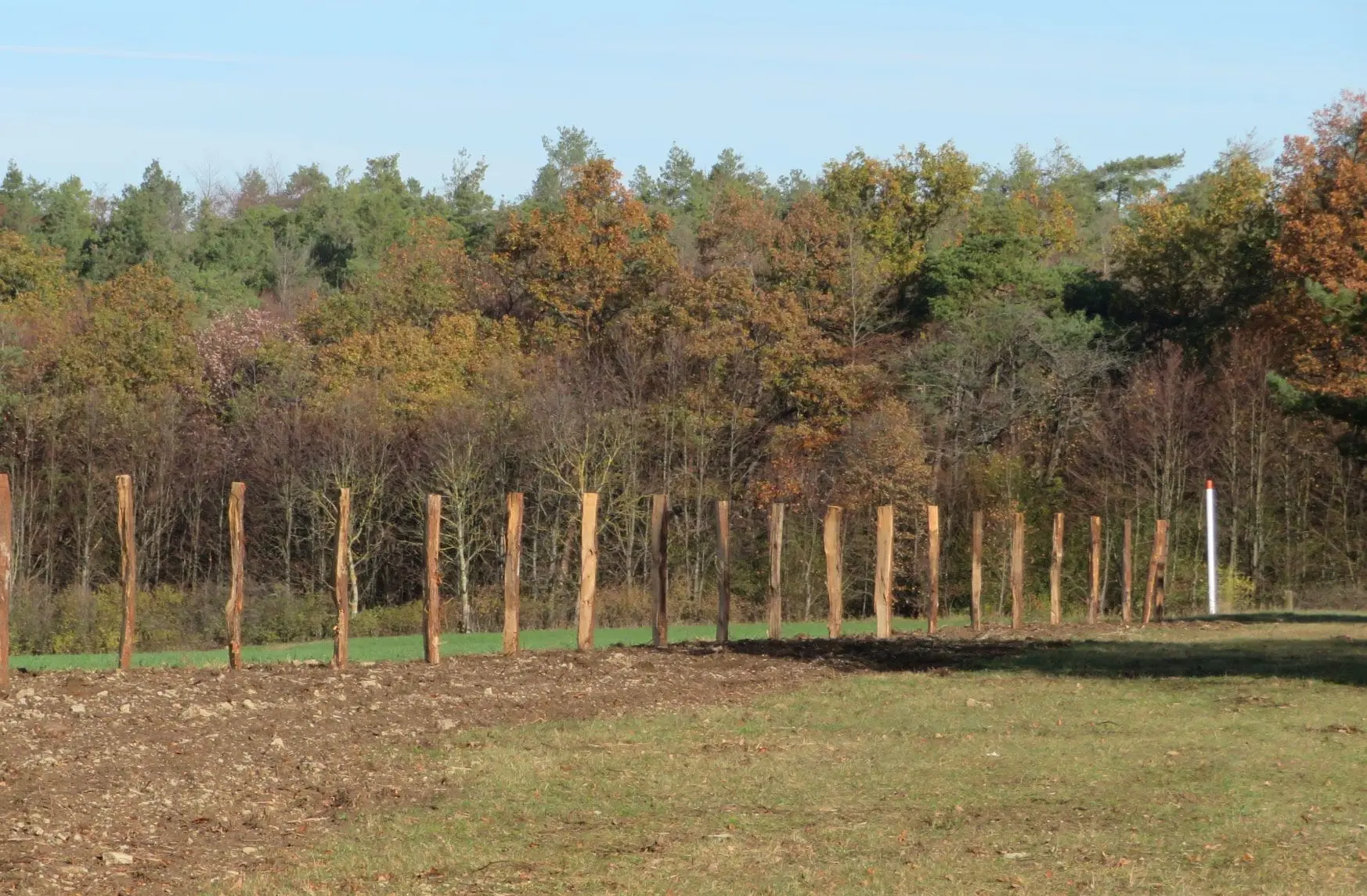
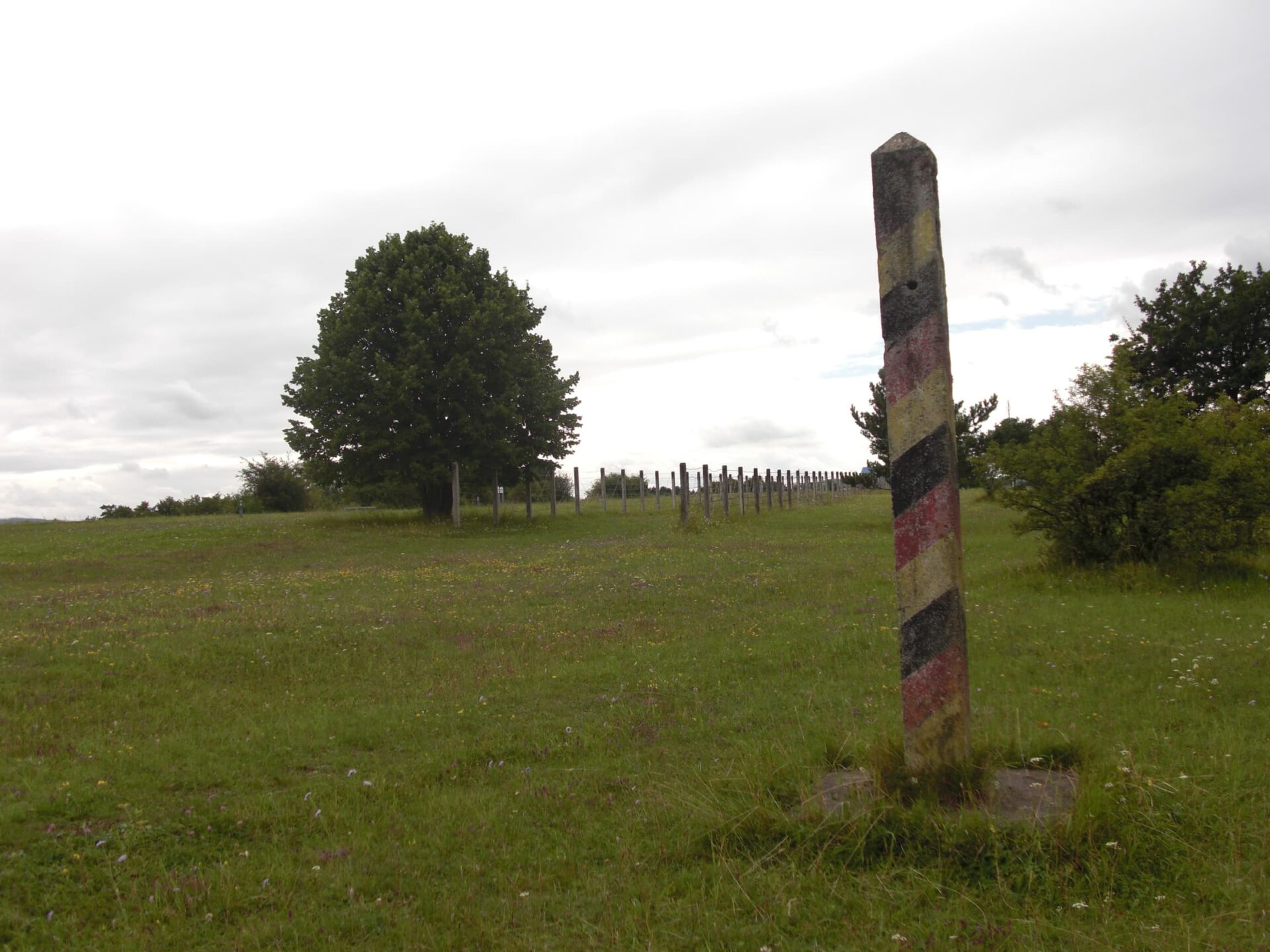
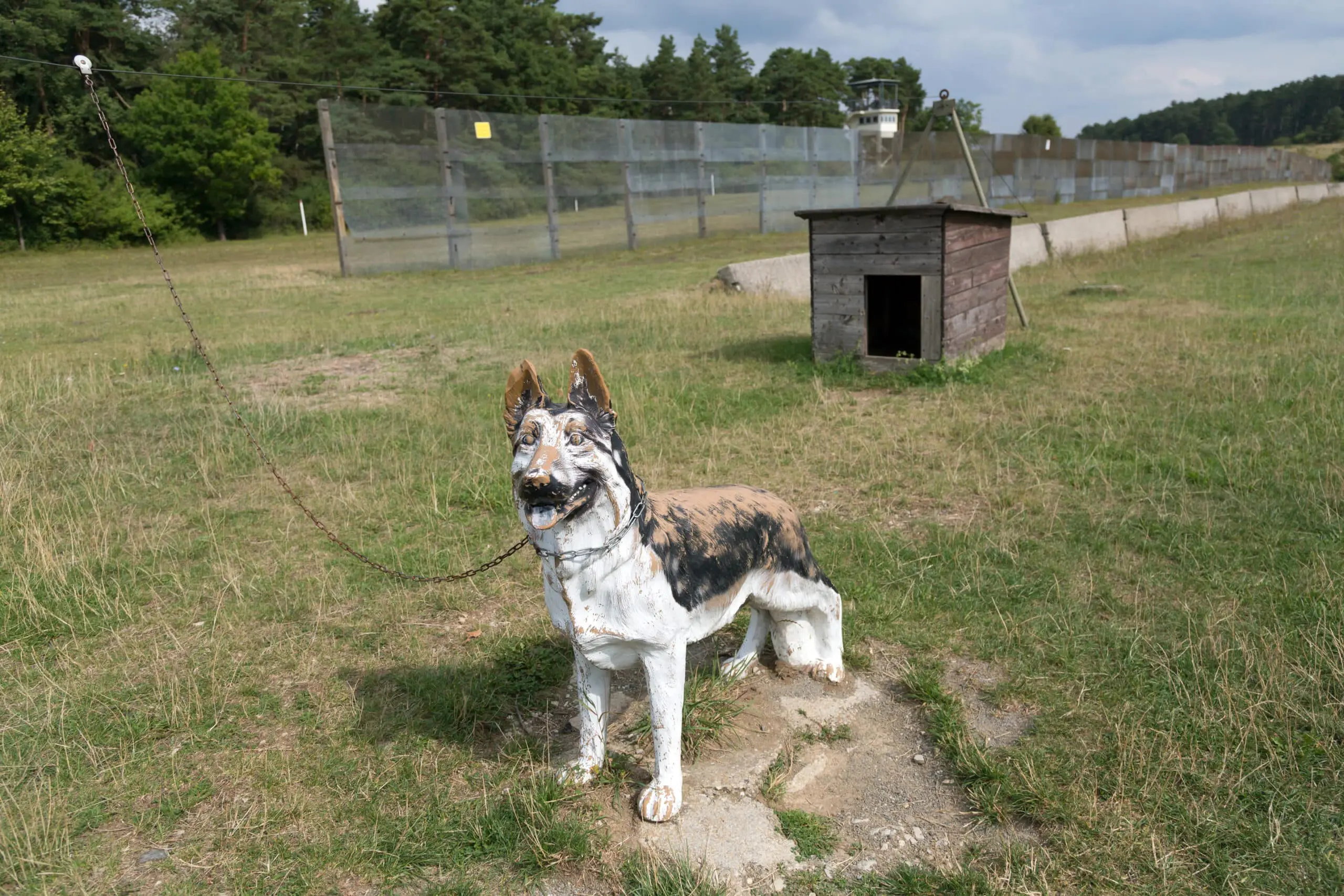
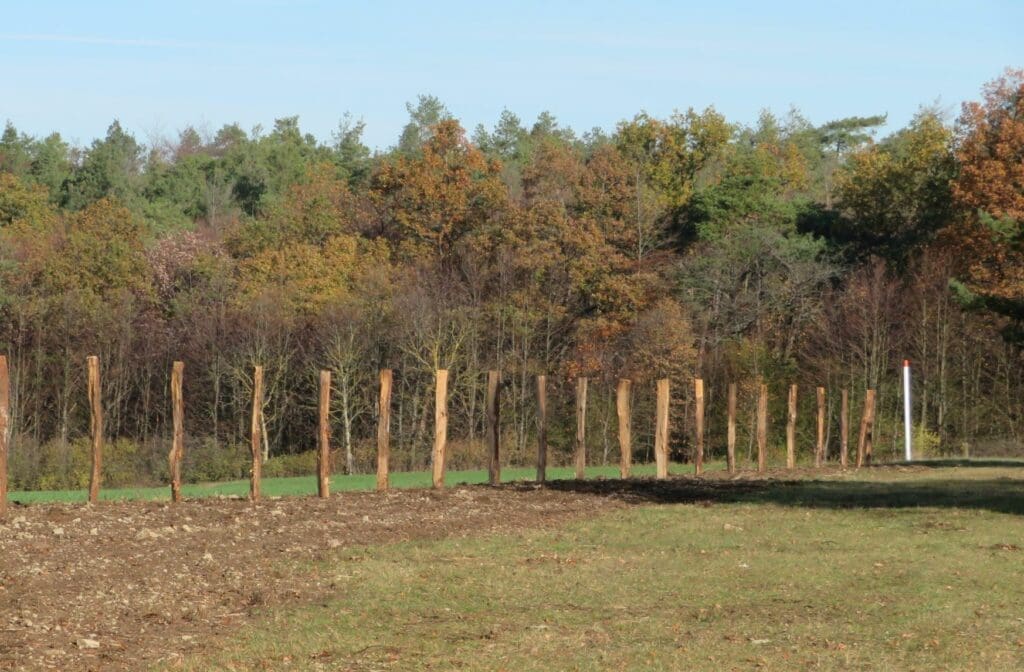
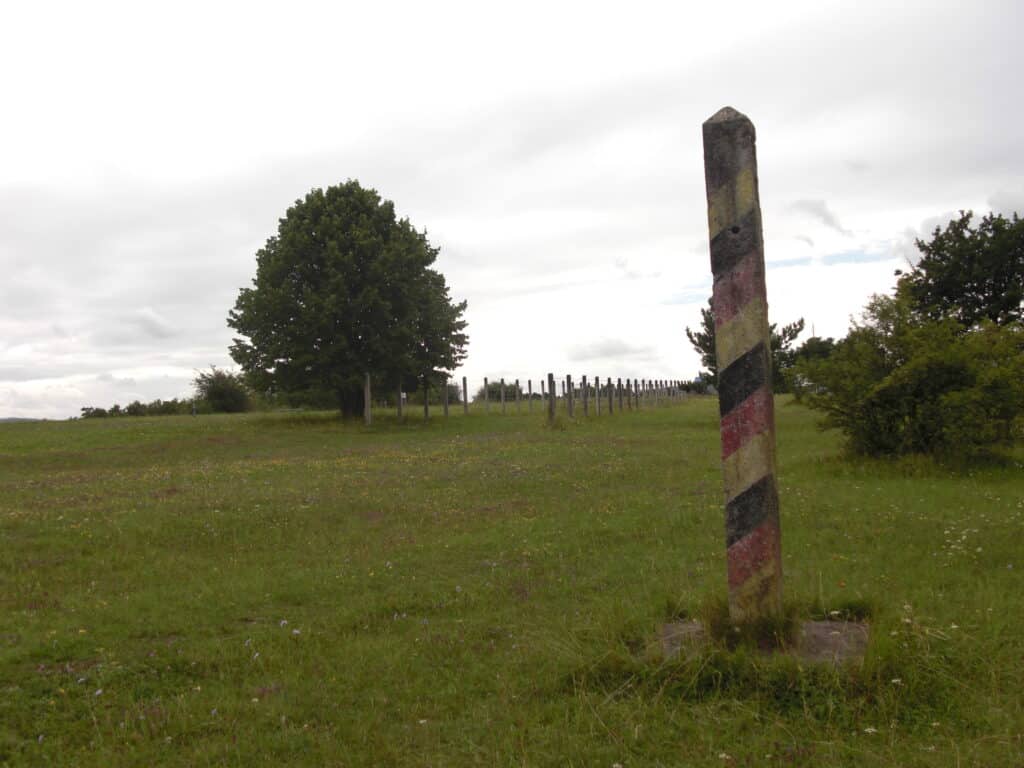
On the Patrol Road between the House on the Border (Geisa/Thuringia) and the former U.S. Observation Post Point Alpha (Rasdorf/Hesse), the GDR border installations from the 1950s and 1960s can be seen in their reconstructed individual stages of expansion at an authentic historical site. The 1970s and 1980s section, as well as the observation tower of the GDR border troops have been preserved and presented true-to-the-original.
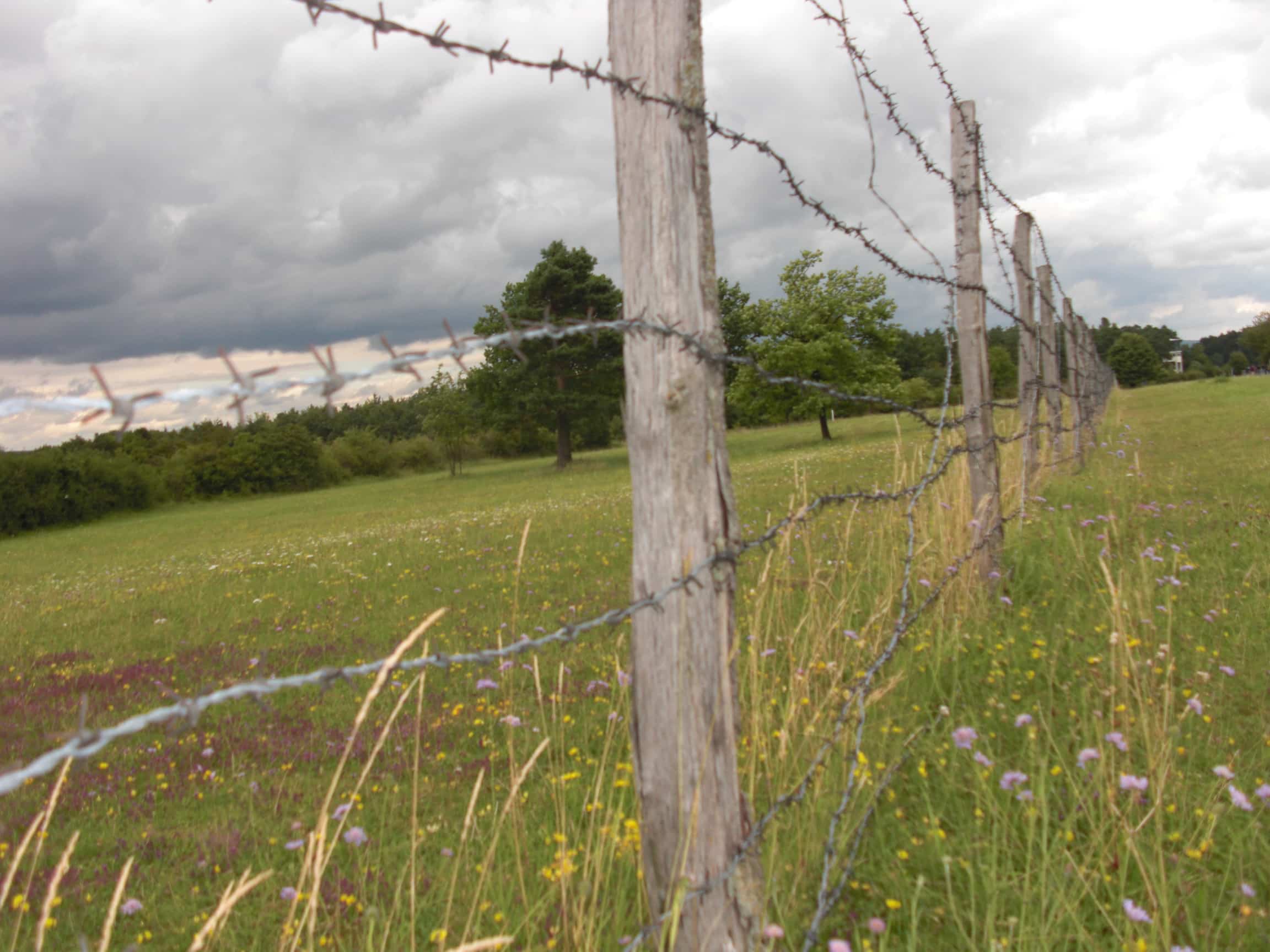
In the 1950s, a barbed wire fence succeeded the once simple wooden roadblock which indicated the border between two occupational zones after the war. Over the following decade, the border was equipped with a double-row fence stabilized with concrete posts. Between these post, wooden box- mines were initially placed and later, plastic mines. From the 1970s onwards, the infamous fragmentation mines (SM 70) were installed directly on the fence. In its last stage of development, the metal fence was in average a little over three meters high, and as of 1972 preceded by a motor vehicle trench. This was intended to prevent a motor vehicle from breaking through the GDR border and escaping to the West. The different stages of development impressively illustrate how the face of the inner-German border changed over four decades and became increasingly impassable.
Fates of Flight
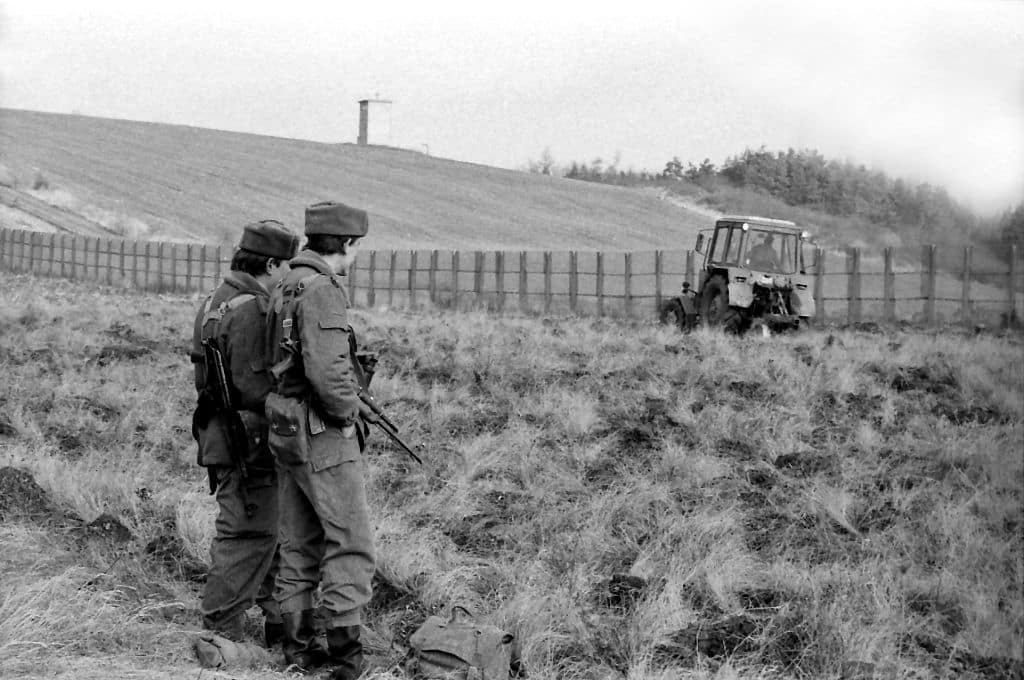
For more than forty years, the increasingly hermetic closure of the GDR did not prevent people from repeatedly attempting to escape the dictatorial system of the SED-State and crossing the border. More than 60,000 people were sentenced to prison terms, these averaging four years for “attempting to flee the Republic” or preparing to do so. Adventurous constructions served as means of escape, from balloon construction to mini-submarines. In 1979, two families managed to escape in a homemade hot-air balloon. From then on, forest meadows and clearings near the border were deemed as possible launching sites for hot-air balloons and subjected to special monitoring. However, most escapes were less spectacular and fortunately ended in freedom. But the progressive optimization of the border installations made an escape increasingly dangerous. As early as the 24th of August 1961, the first fatal shots were fired at the border.
Das Birkenkreuz - The Birch Cross - The Escape Attempt of Bernhard F.

The Birch Cross in front of the U.S. Army Observation Post is a special memorial. It was erected in memory of an escape attempt that two men dared to make at this spot, on Christmas 1975. Shortly before they reached their destination at the last border fence, Bernhard F., a native of the neighboring village, triggered the fragmentation mine placed there. At that time, it was assumed that he had lost his life. His companion was arrested, and decades later, as it turns out, he had survived with serious injuries. This happened in front of the Americans on duty, but they were not allowed to intervene. Today the Birch Cross stands for all of those who were victims of the German division, and it reminds of the injustice and arbitrariness of the state during the second German dictatorship. This human suffering must not be forgotten.
Monument to German Division and Reunification
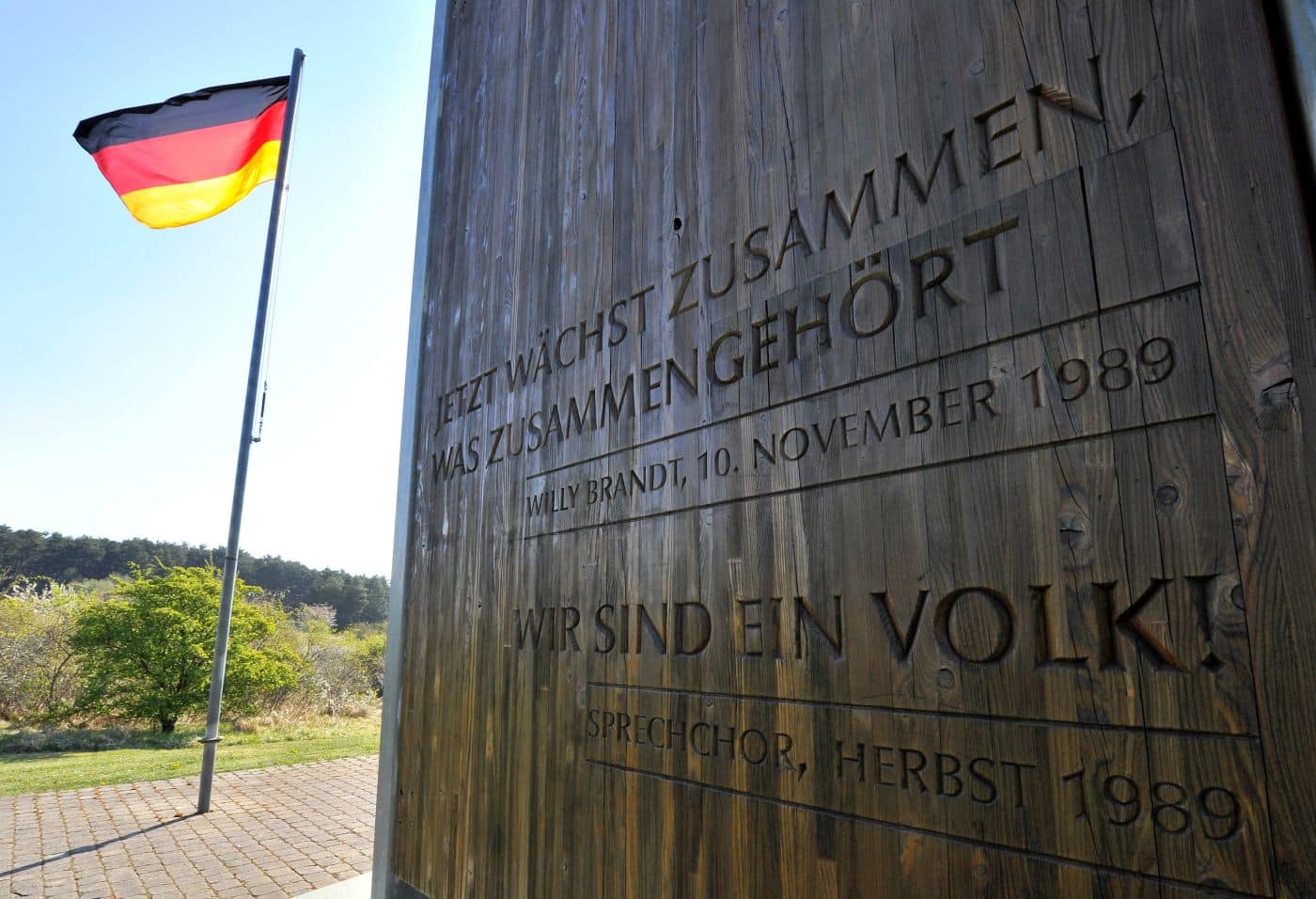
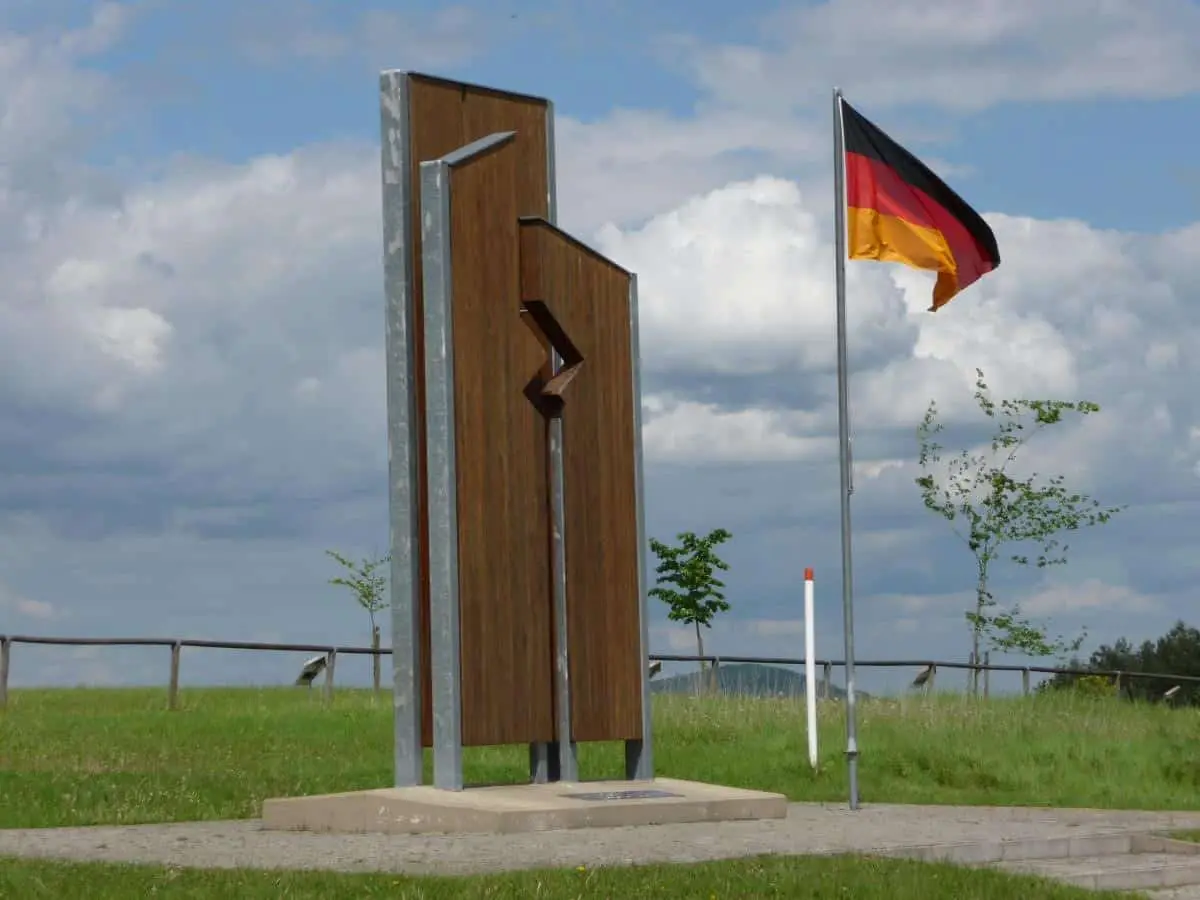
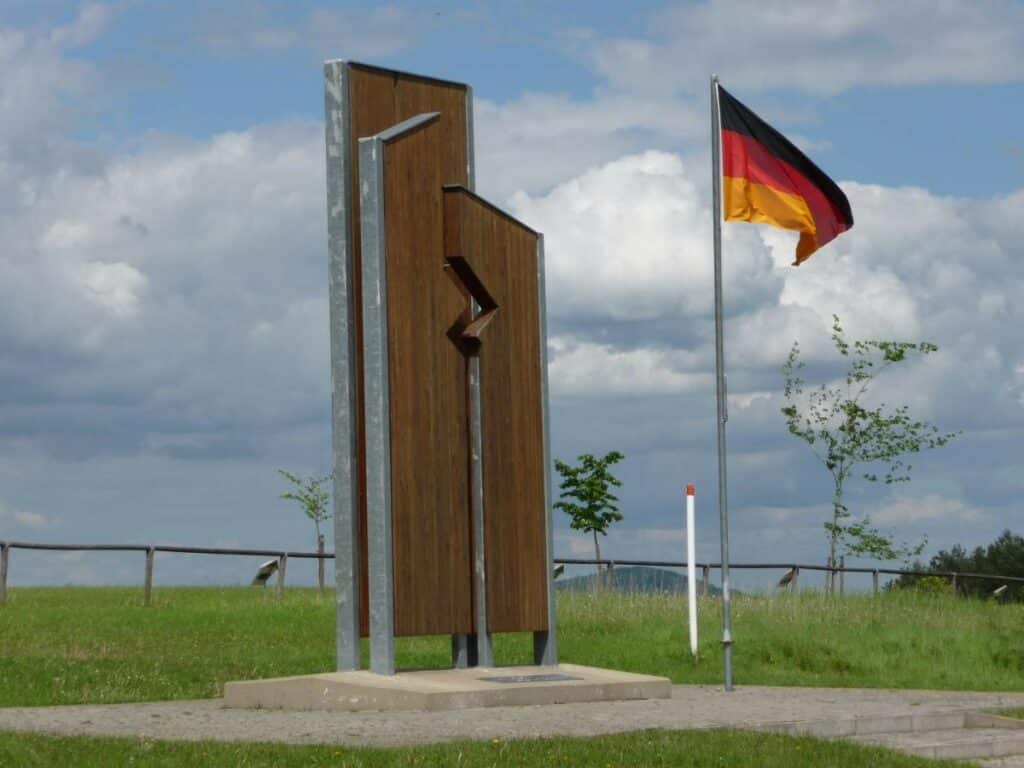
“The victims of German division, the brave, of the peaceful revolution and the builders of German unity” are honored with the “Denkmal der deutschen Teilung und Wiedervereinigung” – Monument to German Division and Reunification. It was unveiled on the 13th of August 2000, 39 years after the construction of the Berlin Wall, directly on the German-German border, next to the former “Observation Post Alpha” and directly on the Death Strip. Three wooden stelas framed in metal symbolize the German division. The joining point of the pieces symbolizes the still visible and painful scar of the division. On the back, there is one of the slogans spoken by thousands of demonstrators during the days of the peaceful revolution in the fall of 1989: „Wir sind ein Volk” (We are One People) and the legendary words of Willy Brandt: Jetzt wächst zusammen,was zusammen gehört. (Now, that which belongs together grows together). The monument was designed by students of the wood sculpting trade from the State Vocational Training Center in Bad Salzungen.